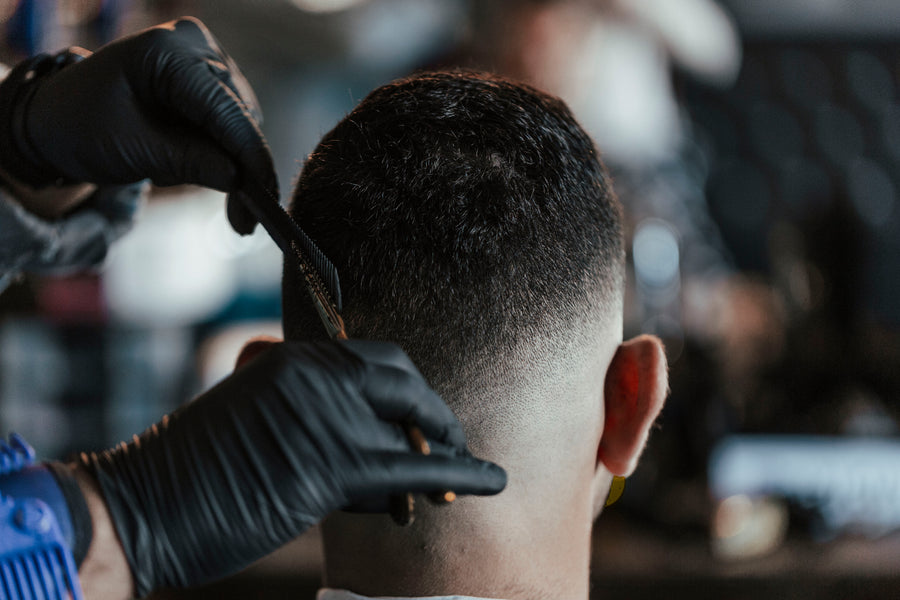
A mid fade with a beard has two separate outlines joined at the sideburn. Decide whether that junction should fade smoothly or remain distinct, then specify the beard length to preserve. A closer haircut does not require a shorter beard.
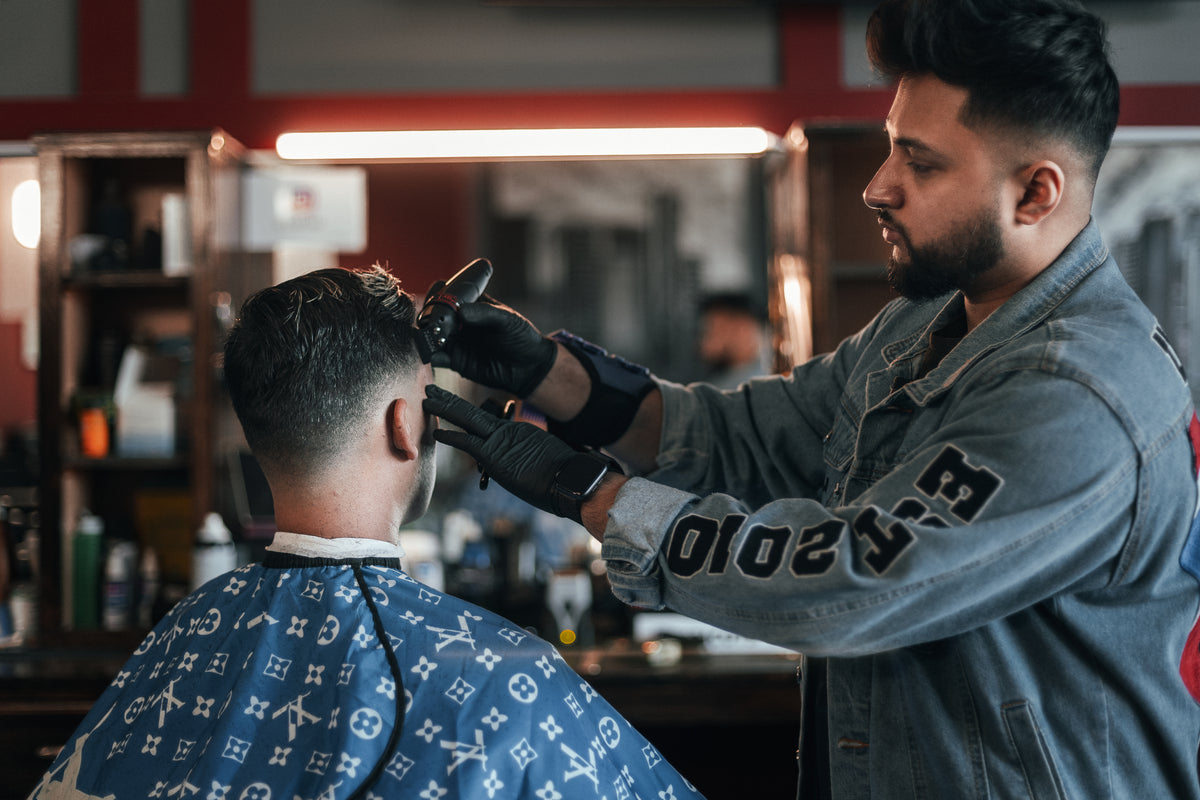
Choose the version that fits your routine
Compare the result you want before deciding on a guard number or product.
| Direction | What changes | What to confirm |
|---|---|---|
| Soft beard connection | Hair length changes gradually through the sideburn | Identify where the beard blend should stop. |
| Stronger separation | A clear break between haircut and facial hair | Check the side profile before committing to a sharper gap. |
| Preserve a growing beard | Refine the junction while keeping chin and cheek length | Book the correct service and state which areas are not to be shortened. |
Treat the haircut and beard as one silhouette
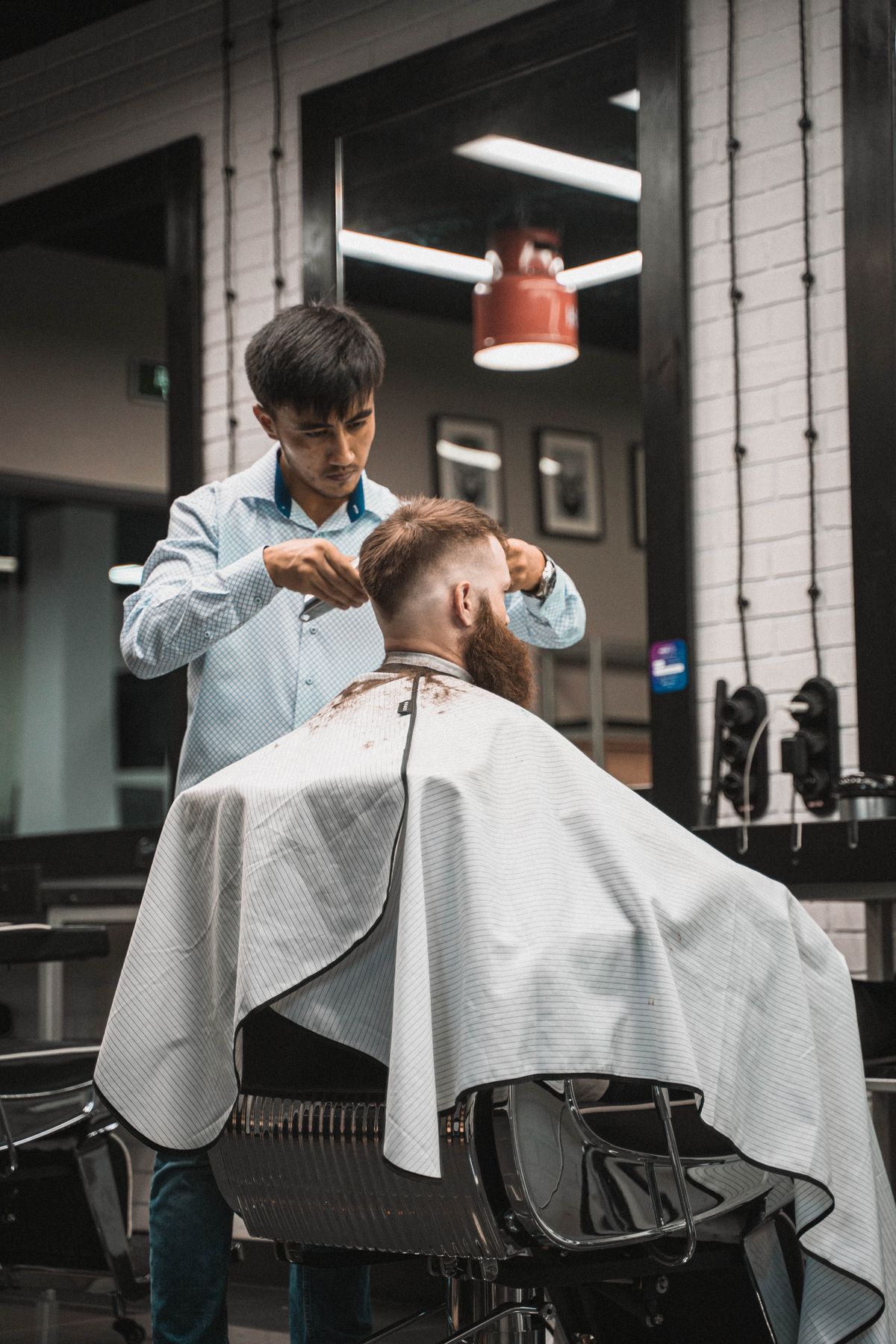
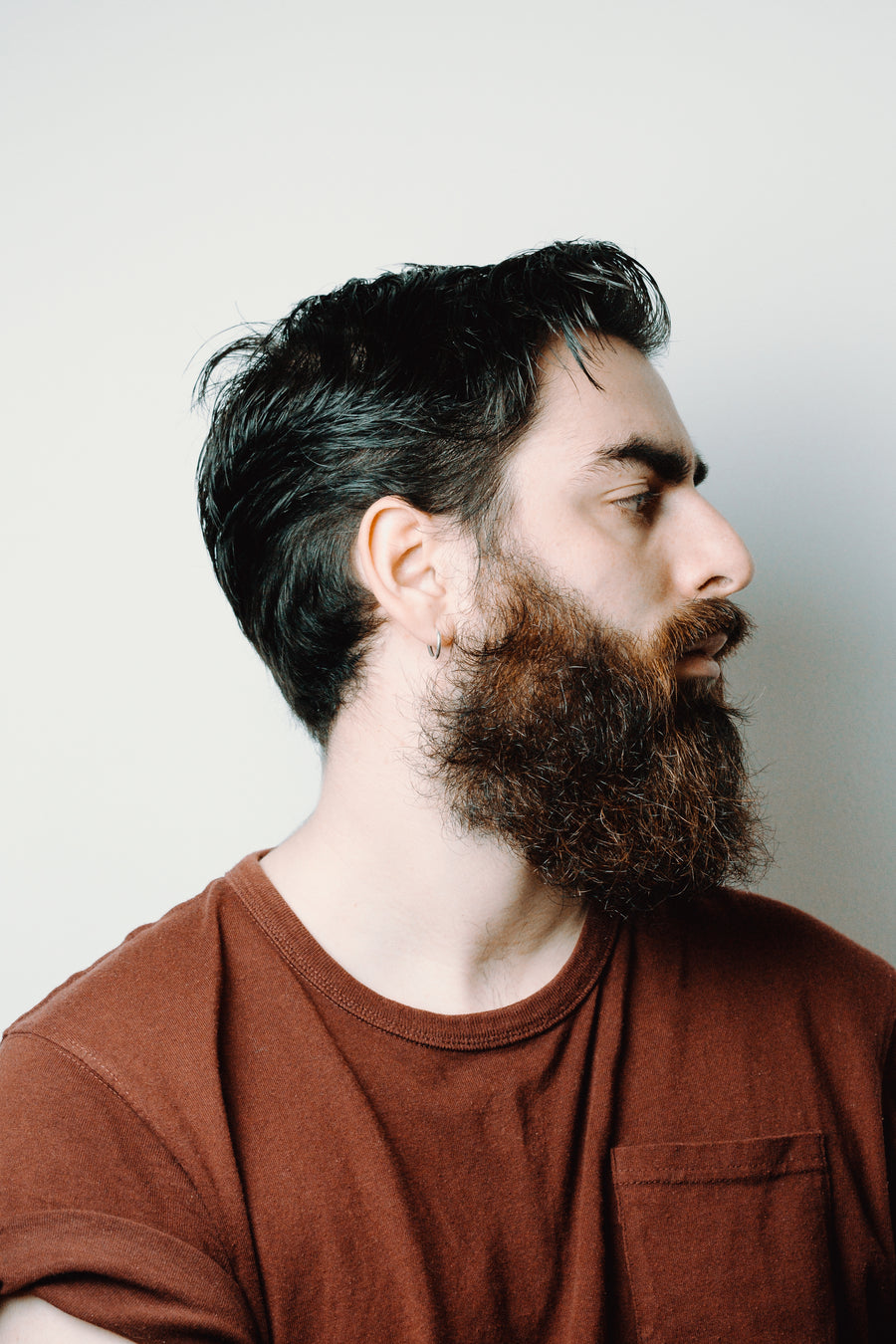
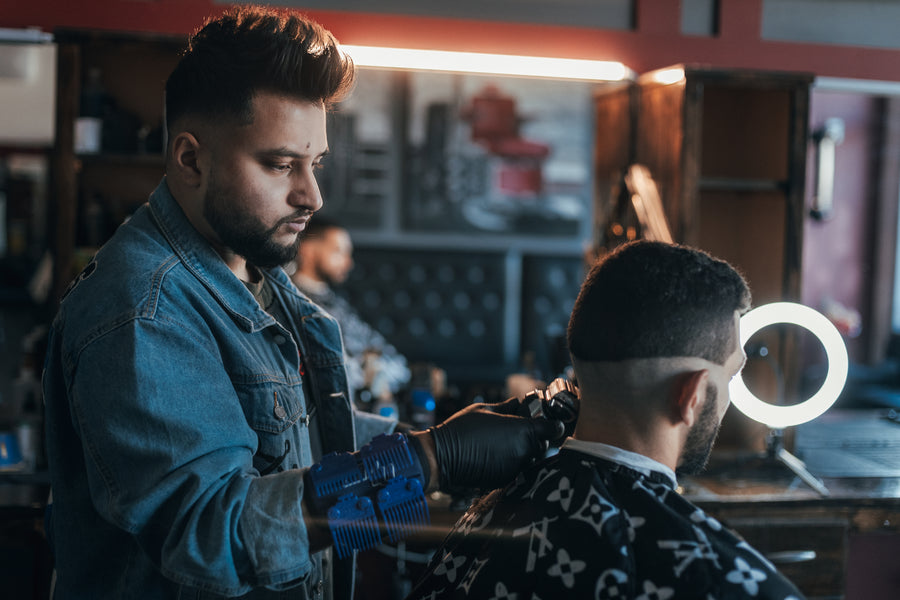
A close haircut can make the beard look more prominent, while a fuller top may balance it differently. Look at the complete side profile rather than choosing the haircut and beard in isolation. You may like the relationship between them in a photo even if neither length is right for you exactly as shown.
Point out the feature that matters: a clean temple, a softer sideburn connection, a fuller jaw or a natural cheek line. Avoid vague requests to make everything match. Matching does not have to mean cutting the hair and beard to a similar length. It can mean preserving the right amount of fullness in each area so the overall shape feels deliberate.
Choose a blended or defined connection
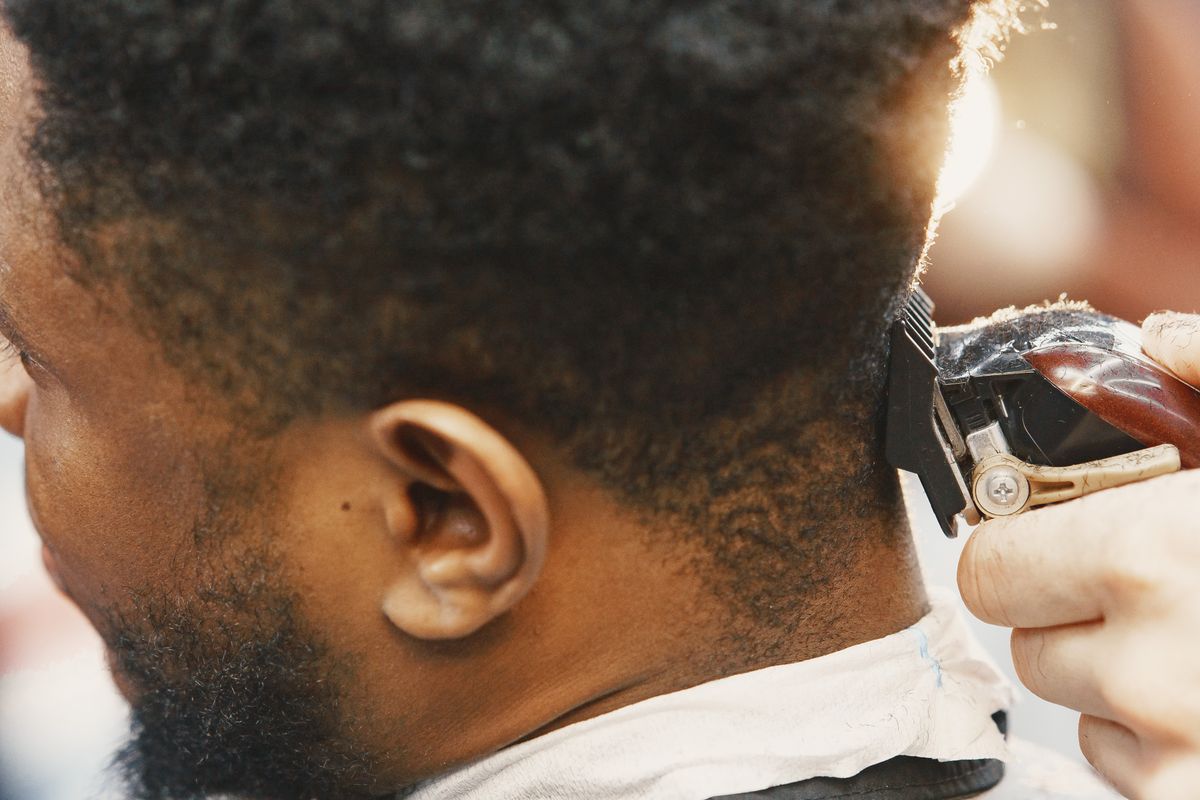
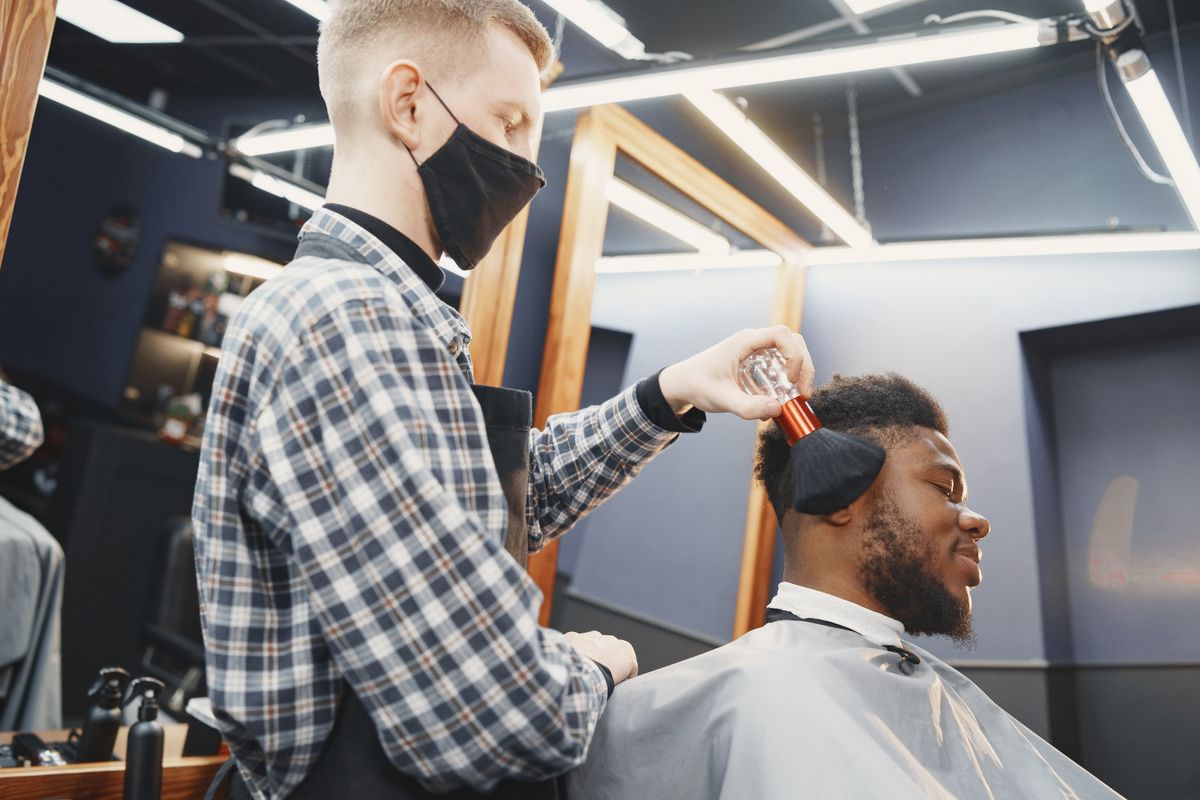
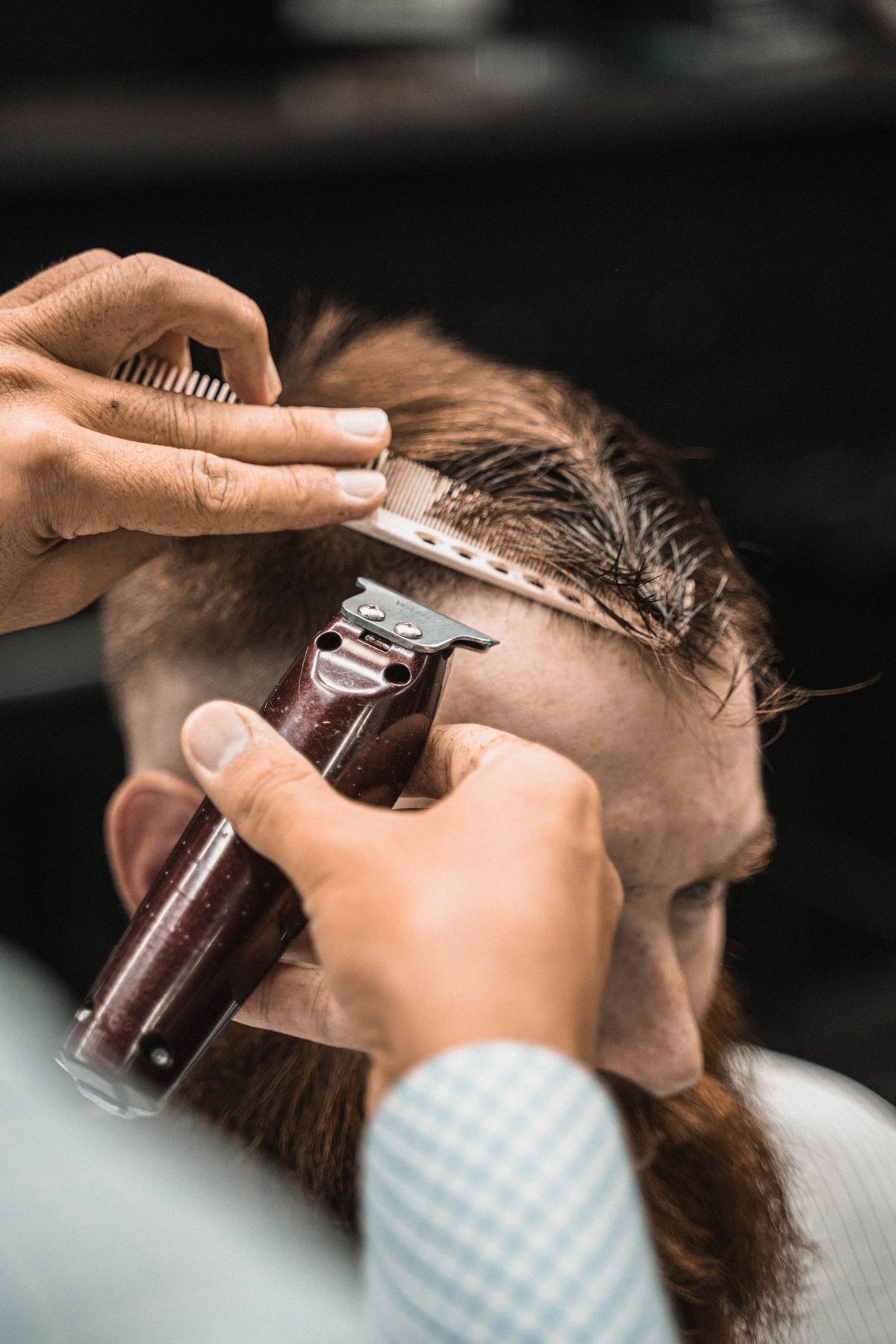
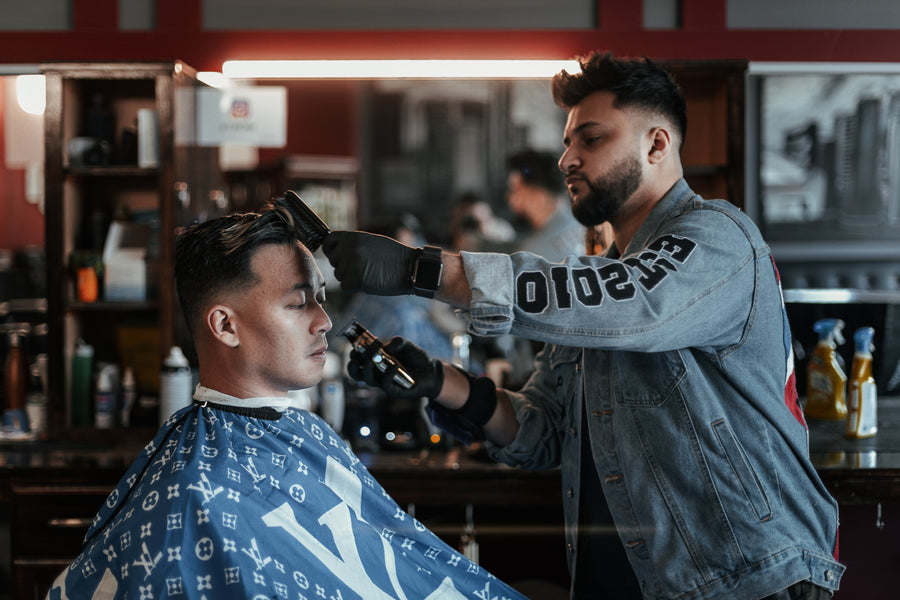
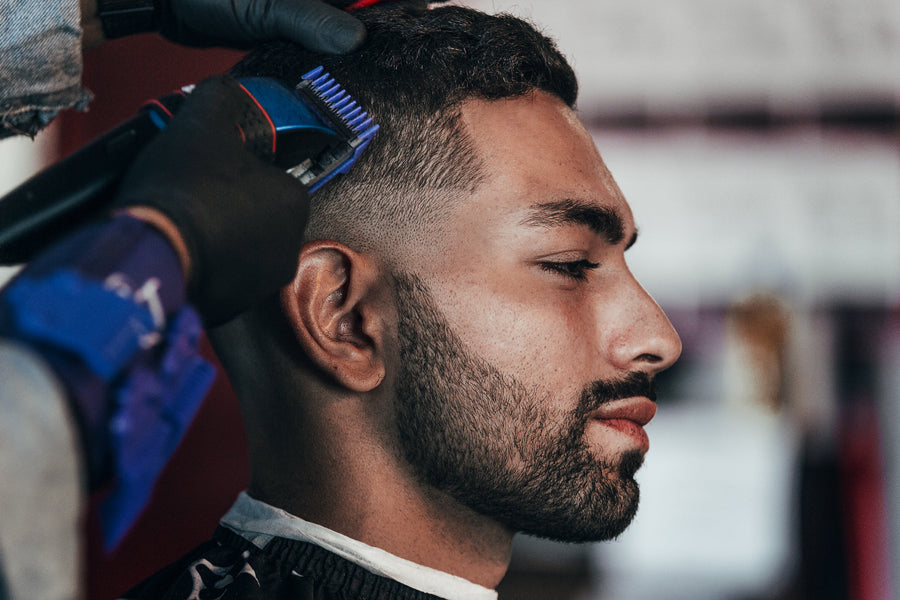
A blended sideburn gradually changes the facial-hair length near the haircut. A more defined connection preserves a clearer boundary or contrast. Show a close side reference if you have a preference, because a front-facing photo may conceal the transition entirely.
Ask where the blend will begin and where it will stop. Taking the sideburn closer does not automatically require removing fullness through the cheek or jaw. If those areas are important to you, indicate them before trimming starts. The barber should explain how the connection will work with your actual growth, rather than promising the same density as a reference beard.
Keep the beard length decision separate
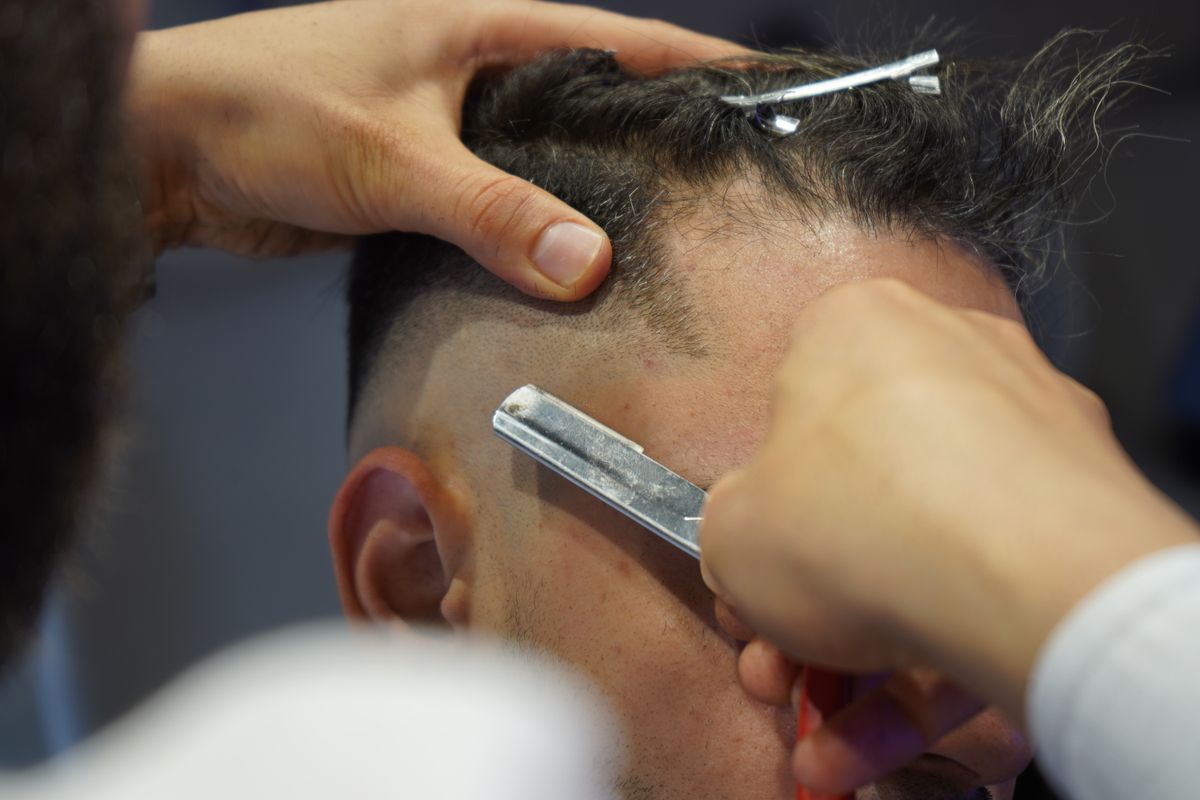
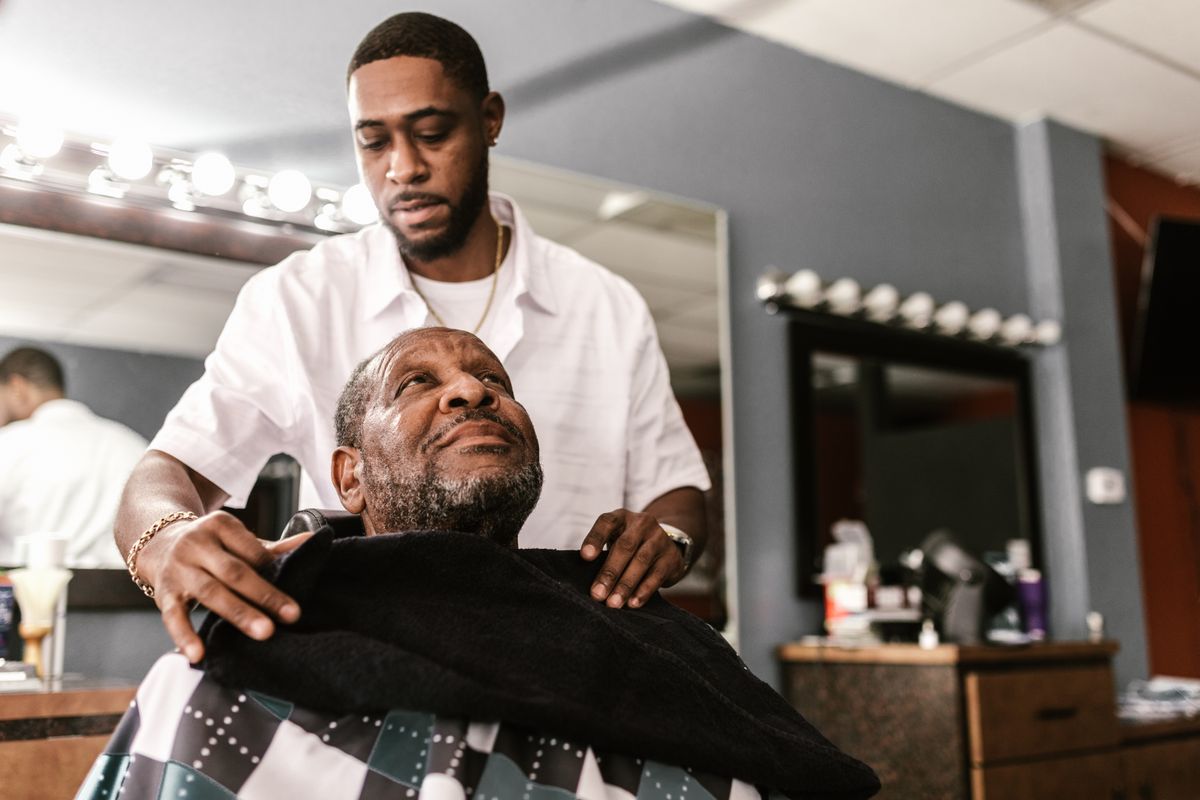
Decide whether you want the beard shortened overall, reshaped while keeping length, or simply connected to the new haircut. These are different services and can produce different results. If you have been growing the beard, use direct language such as “keep the chin length and most of the cheek fullness; only refine the connection.”
A useful consultation also distinguishes the lower outline from the bulk inside it. A beard can look more controlled after shaping without every part being taken much shorter. Ask what the barber intends to remove and why. Checking this first reduces the chance that “tidy it up” becomes an all-over reduction you did not want.
Cheek line and neckline choices
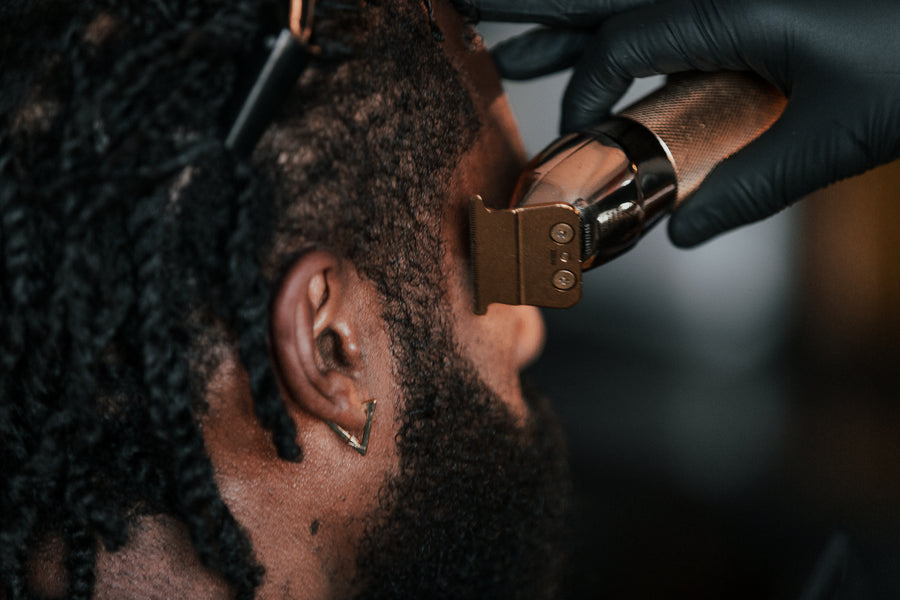
The cheek and neck outlines affect how natural or sharply defined the beard looks. Do not assume a reference line will sit in the same place on your growth pattern. Discuss where your existing beard grows strongly and which areas you prefer to leave softer.
Before the barber begins detailed outlining, confirm whether you want a natural edge or a more deliberate shape. If you have a previous photo you liked, point to its outline rather than presenting the whole image as a complete instruction. The neckline should also be discussed in the context of the beard length and side profile. Avoid memorizing a universal placement rule that ignores the actual shape being created.
Work with density rather than hiding the question
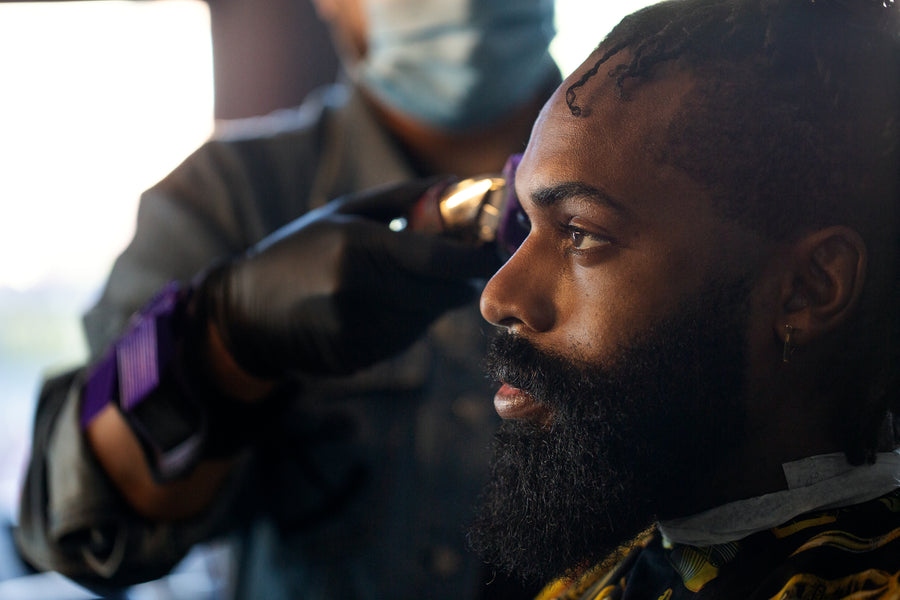
Beard density can vary across the sideburn, cheek, moustache and chin. A sharp fade cannot manufacture growth where it is sparse. Ask how a blend would look with your existing coverage and whether a softer transition would be easier to maintain.
If one side looks different from the other, let the barber assess the overall silhouette instead of demanding identical outlines at the cost of removing more hair. Symmetry in appearance may require adaptation to the way each side grows. An honest reference comparison should consider this, particularly when a photograph shows a very dense beard under lighting that makes the edge look unusually solid.
A clear consultation and finishing check
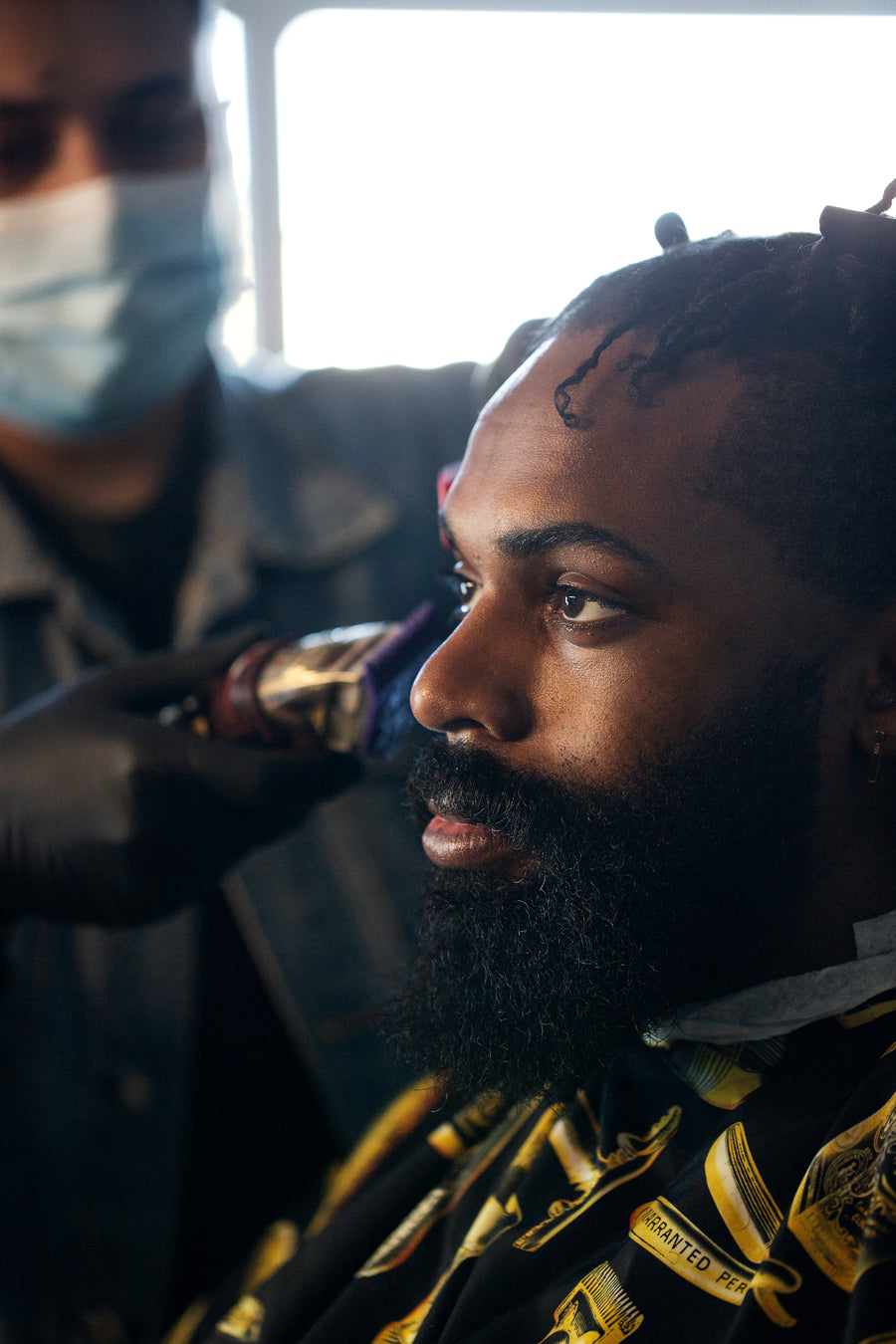
A starting request could be: “I want a mid fade with the sideburn blended into my beard. Keep the beard full through the cheek and jaw, and let us agree on the outline before you trim it.” Add your preferred shortest haircut finish and top direction so the hair request is complete too.
Check the result from the side and front before leaving. Ask whether the beard was styled into a shape you can recreate with your routine. If a brush, dryer or product was used, have the barber explain the method and amount. Confirm what a future maintenance visit would include, particularly if the beard and haircut will not need a full trim at the same time.
Maintain the connection as both areas grow
Hair and beard can stop looking freshly blended at different times. Instead of assuming every visit must shorten both, note what actually bothers you first: the sideburn connection, cheek outline, neckline or the haircut itself. This makes it easier to request a targeted service.
Avoid repeatedly moving the cheek or neck outline inward just to recover a sharp edge. If you are unsure how to maintain it yourself, ask the barber for a simple plan that preserves the intended shape. Take reference photos after the appointment and use them to explain the result you want repeated. When changing beard length, tell the barber before the usual fade routine begins so the new connection supports that goal.
A routine you can test at home
- Arrange the beard in its usual direction before assessing its outline.
- Look at the sideburn connection from both sides, not only in a front mirror.
- Record whether the first area needing attention is the haircut, the cheek line or the connection.
- Request a targeted refresh when appropriate instead of automatically taking the whole beard shorter.
The beard loses fullness after a “tidy-up”
The phrase does not define the amount or location of trimming. Specify the sideburn, cheek outline, moustache and underside separately. For a growing beard, ask for the connection only and point to the bulk you want preserved. Photographing the side profile beforehand makes the scope clearer.
A more precise barber request
Blend the haircut into the sideburn but keep the beard full through the cheek and chin. Refine the outline only after we agree on it. I am not asking for an all-over beard reduction.
An example request to adapt, not a guaranteed result or a record of a tested client.
Common questions
Do I need a long beard with a mid fade?
No. The pairing can work with different facial-hair lengths. The useful decisions are how the sideburn connects, what fullness you want to preserve and what routine you prefer.
Should the beard fade go as short as the haircut?
Not automatically. Ask your barber how close the sideburn connection should be on your growth pattern. The cheek and jaw can retain a different amount of fullness.
Can I ask only for the beard connection to be tidied?
Yes, but confirm the service and scope with the shop. Explain that you want to preserve overall beard length and identify the exact area you want refined.