
A mid fade with curls combines a shorter side blend with a curly top. Choose the dry curl length and outline first, then agree how much of the upper sides stays full. “Curly” does not specify density, fade height or a skin finish.
Choose the version that fits your routine
Compare the result you want before deciding on a guard number or product.
| Direction | What changes | What to confirm |
|---|---|---|
| Compact curls | A smaller dry outline with curls still visible | Ask the barber to show the proposed dry fringe length before shortening it. |
| Rounded curly top | More width and fullness through the upper sides | Keep a soft corner where the curls meet the shorter sides. |
| Long curly fringe | Curls fall farther onto the forehead | Check how far the fringe lifts when completely dry, not only when stretched. |
Agree on the dry shape first
Curly hair may sit differently when wet, stretched, freshly styled or fully dry. That makes a simple length instruction less useful than a clear description of the result you want. Point to where you want the front curls to finish and describe the amount of height or roundness you prefer through the crown. Your barber can then assess the cut with that end result in mind.
Do not rely on a universal shrinkage percentage. Different curl patterns and routines behave differently, and the same head can contain more than one pattern. Explain what your own hair does after washing and drying. If the curls lift higher than expected or become wider through the sides of the top, say so before the cut. A reference of your usual dry hair can make this conversation much clearer.
Choose compact, rounded or longer curls
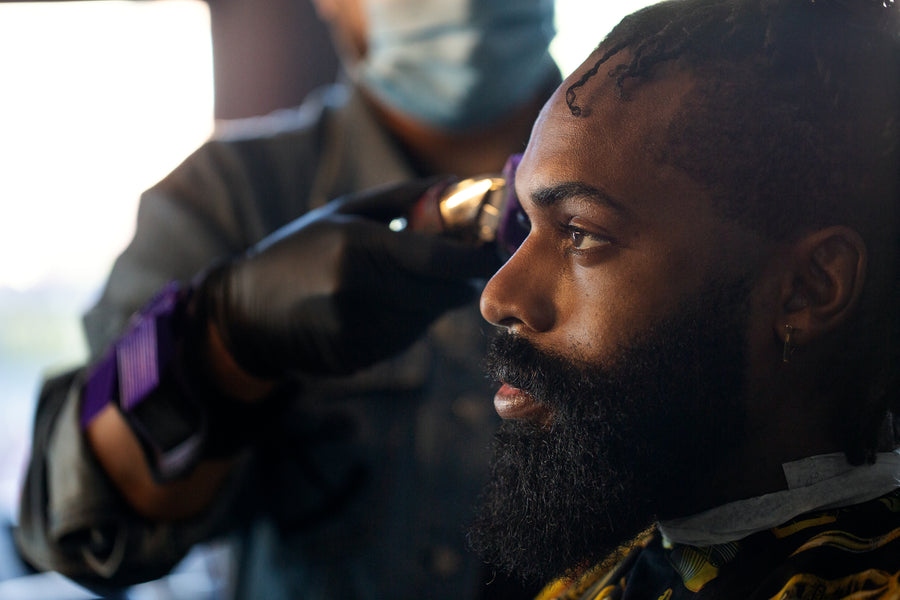
A compact curly top keeps the overall shape closer to the head. A rounded top preserves more visible fullness, while a longer curly fringe brings movement toward the forehead. These are different silhouettes, not simply different amounts of the same haircut. Decide which outline you like from the side as well as the front before choosing how closely to fade underneath it.
Consider what you are willing to do each morning. A shape that needs deliberate definition may ask more of your routine than one that works with your usual natural finish. If you prefer volume over neatly separated curls, explain that preference. If definition matters more, say where you want the curl pattern to remain visible. Your barber should understand the priority rather than guessing from a photograph with a heavily styled finish.
Protect the connection between curls and sides
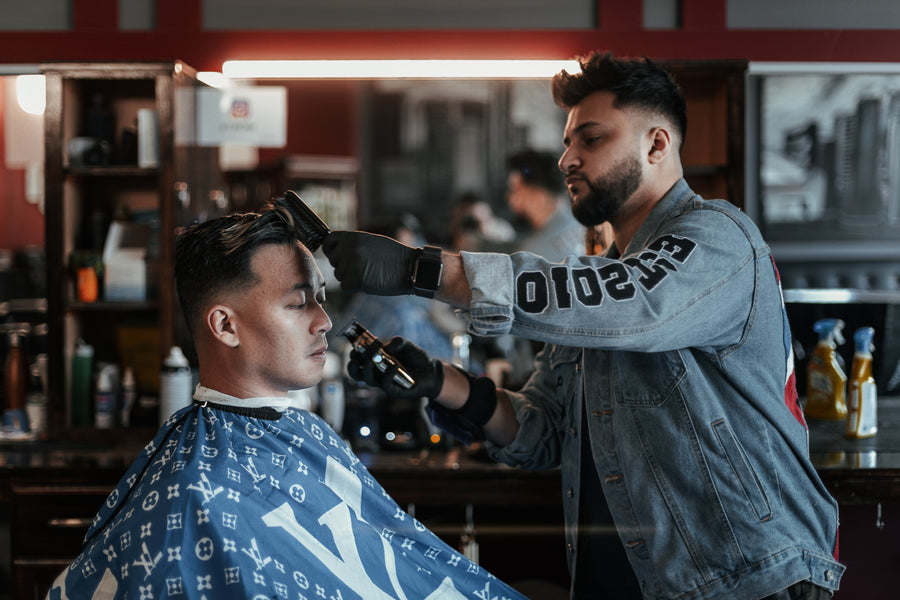
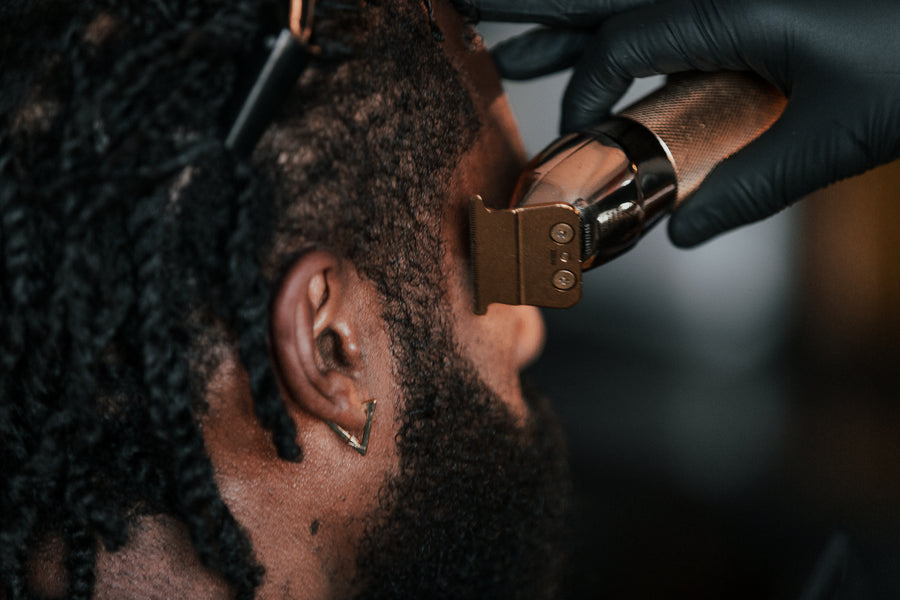
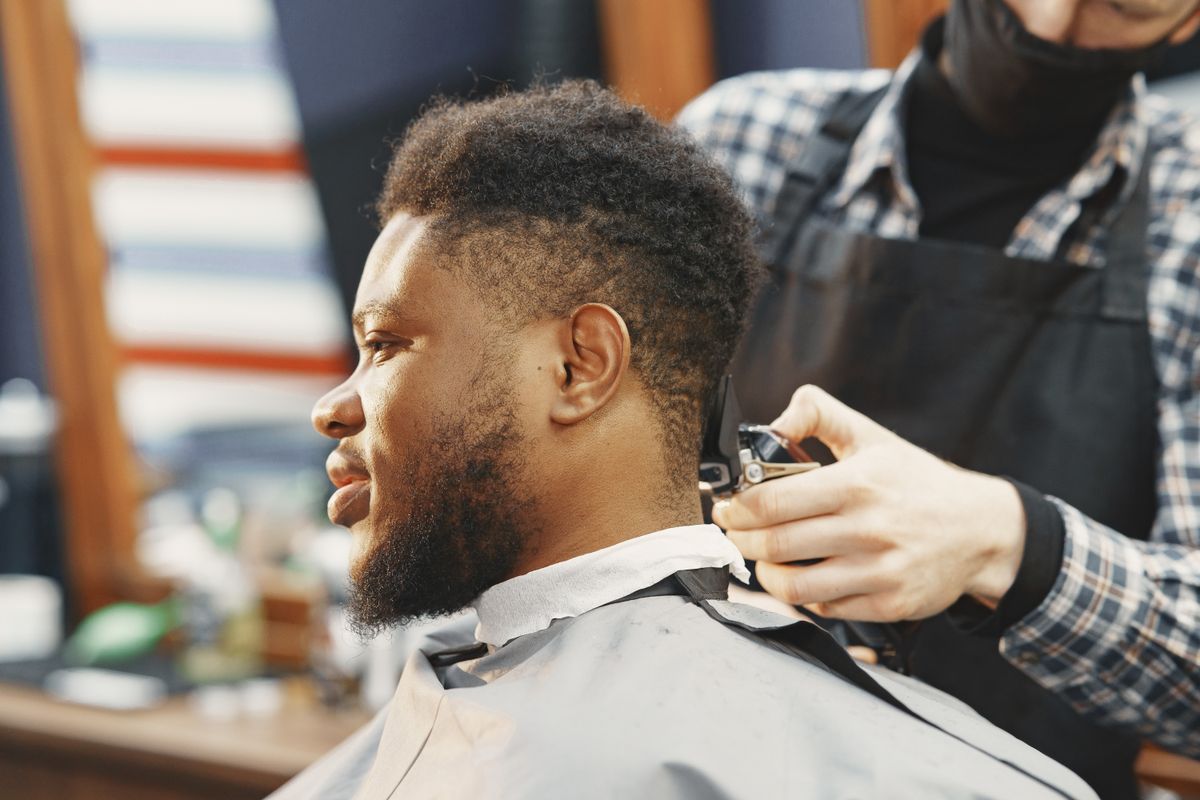
The transition between the fuller top and shorter sides deserves attention. Removing too much length from the edge of the curly top can change its width and leave a more abrupt silhouette than you expected. Keeping more weight can make the shape softer, but too much bulk may feel heavy. Ask the barber to explain the proposed connection before agreeing to take the upper sides closer.
A mid fade does not have to reach skin. If you want the curls to remain the main focus without strong scalp contrast, discuss a longer shortest finish. If you prefer a close base, confirm how high that close area will extend. Placement, finish and top fullness work together, but each is a separate choice. Naming a particular fade cannot settle all three.
Separate curl pattern from density
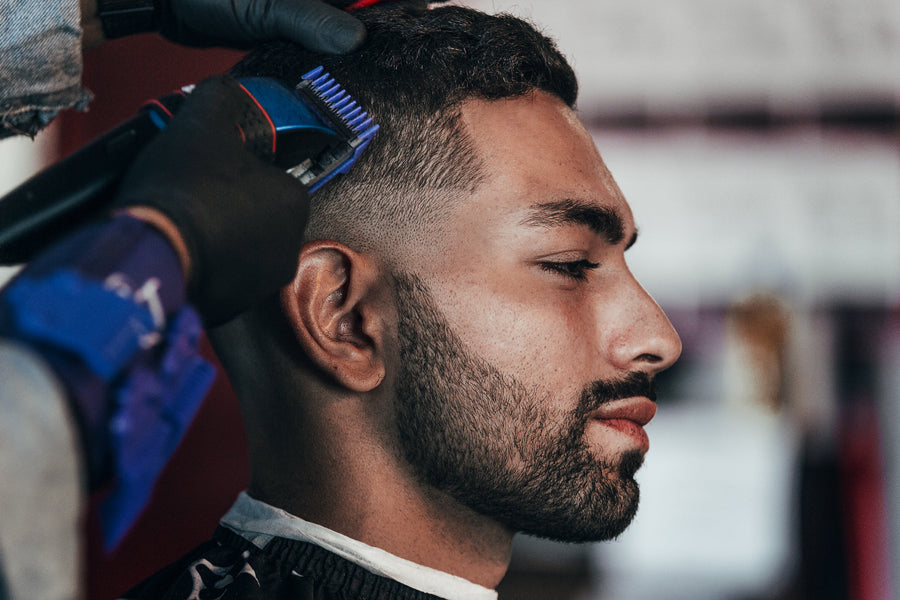
Curly hair can be dense or more sparse, just as straight hair can. A photo with a thick, rounded top may rely on density that your hair does not share. Conversely, a compact reference may hide the amount of weight that needs managing in a fuller top. Match both the texture and the coverage where possible instead of using curl pattern as the only point of comparison.
Look at the front, crown and areas that separate as the hair dries. Tell the barber if one part behaves differently from the rest. Avoid asking for aggressive thinning simply because the top feels large; first discuss which part of the silhouette you want to change. The best question is about the outcome: “Can we reduce width here while keeping the curls intact?” The technique should follow the assessment.
Explain what to preserve in the consultation
A useful starting request is: “I want a mid fade while keeping enough length for my natural curls. Please agree the dry outline with me, preserve fullness through this area and show me the shortest side finish before starting.” Point to the area you mean, whether that is the fringe, crown or upper sides. Replace vague instructions such as “keep it curly” with a visible goal.
Discuss the front hairline and neckline separately. If you prefer a natural outline, say so; a request for tidy sides does not have to mean a strongly defined lineup. If you wear a beard, identify where it should remain full. Finally, explain your usual drying and styling method. The finished haircut should make sense with the routine you can repeat after leaving the shop.
Track the shape as it grows
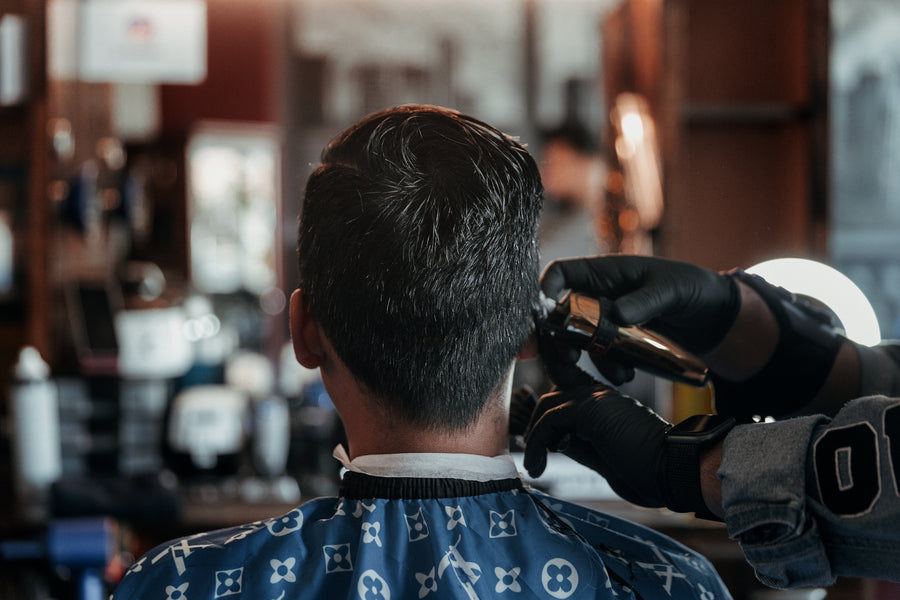
Pay attention to where the silhouette changes first. The fringe may move lower, the crown may become rounder or the side connection may gain width. These observations help you decide whether the next visit needs a full reshape or a more limited refresh. Taking the fade higher every time is not automatically the answer to returning bulk.
If you want to grow the top, say so before the standard haircut routine begins. Ask which areas should retain length and which can be tidied without changing the goal. Keep photographs of a shape you liked and note when it became difficult to manage. That record gives your barber concrete feedback and helps establish a maintenance interval based on your own preference, rather than a fixed schedule presented as a requirement for all curly hair.
A routine you can test at home
- Start with the care routine your curls already tolerate. A new fade does not require replacing every product.
- Arrange the front and sides in their intended direction while the top is damp. Keep the desired dry outline in mind.
- Let the hair dry before judging whether the fringe is too long or the sides too wide. Avoid deciding from a stretched curl.
- Photograph the dry result after your own styling. Use that view to explain any difference from the salon finish.
The top looks like a shelf above the fade
Compare the outline with your hair dry and uncompressed. A strong corner may be deliberate, or it may be more width than you wanted. Ask for a softer connection while pointing out the curls you want to keep. Simply raising the fade removes more side coverage and may make the contrast stronger.
A more precise barber request
Keep my curls rounded and leave the fringe at this dry length. I want a mid fade below that shape, with a soft connection at the upper sides. Show me the shortest finish before we commit.
An example request to adapt, not a guaranteed result or a record of a tested client.
Common questions
Does curly hair need a skin finish underneath?
No. Curls can sit over a mid fade with visible hair at its shortest point. Choose the level of contrast and scalp exposure you prefer.
Should every curly haircut be cut dry?
Cutting approaches vary. What matters for your request is that the barber understands and checks the intended dry result. Ask how they will account for your hair’s normal behavior.
Can I keep a long curly fringe with a mid fade?
Yes, if the remaining length and growth pattern support it. Discuss where the fringe should sit dry and how it connects to the rest of the top.