
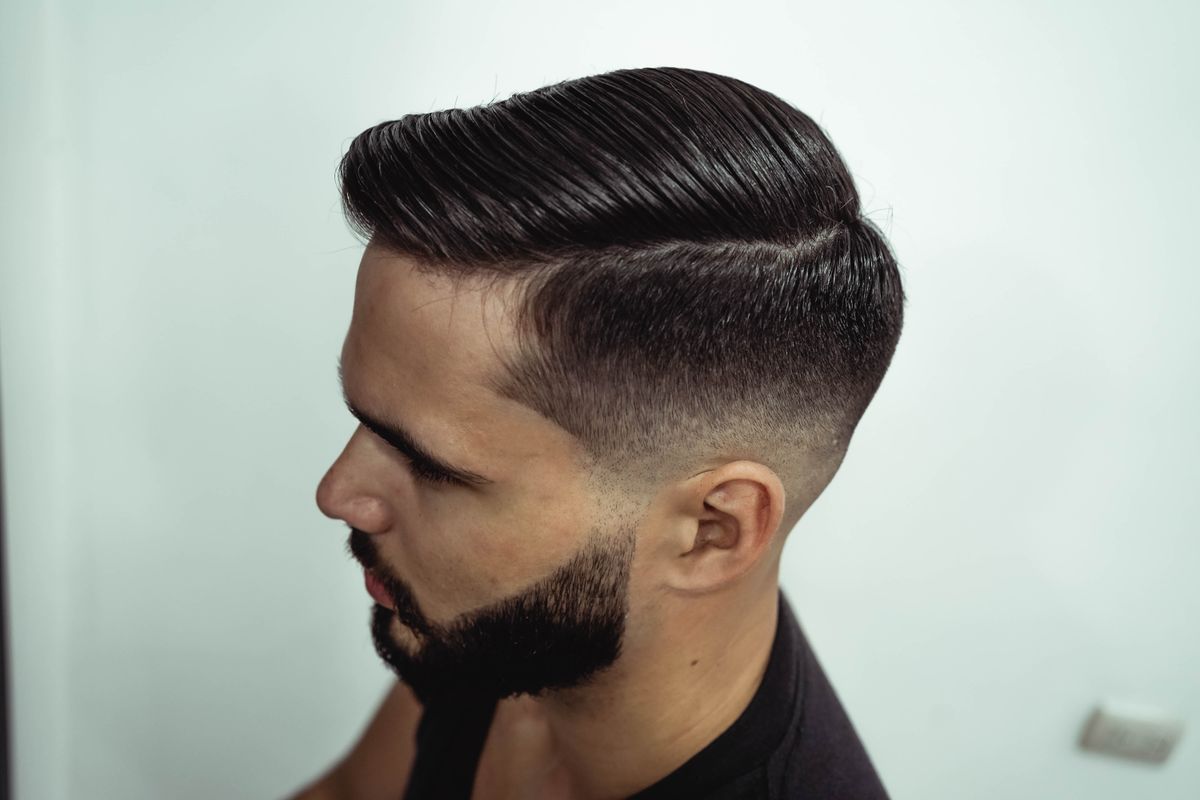
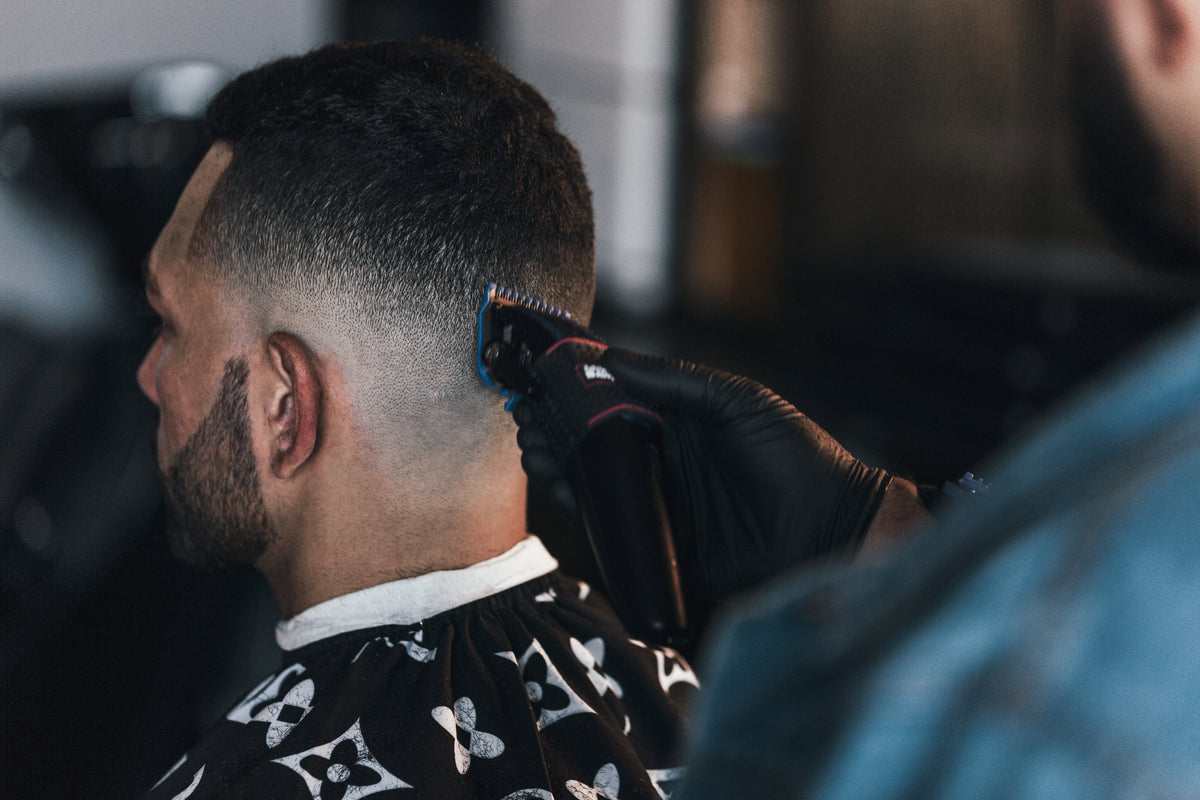
A mid fade with a fringe keeps a forward-facing section at the forehead while shortening the sides. The key choice is the front outline: straight, broken, curved or swept aside. Check that outline when dry, especially when the hair bends or curls.
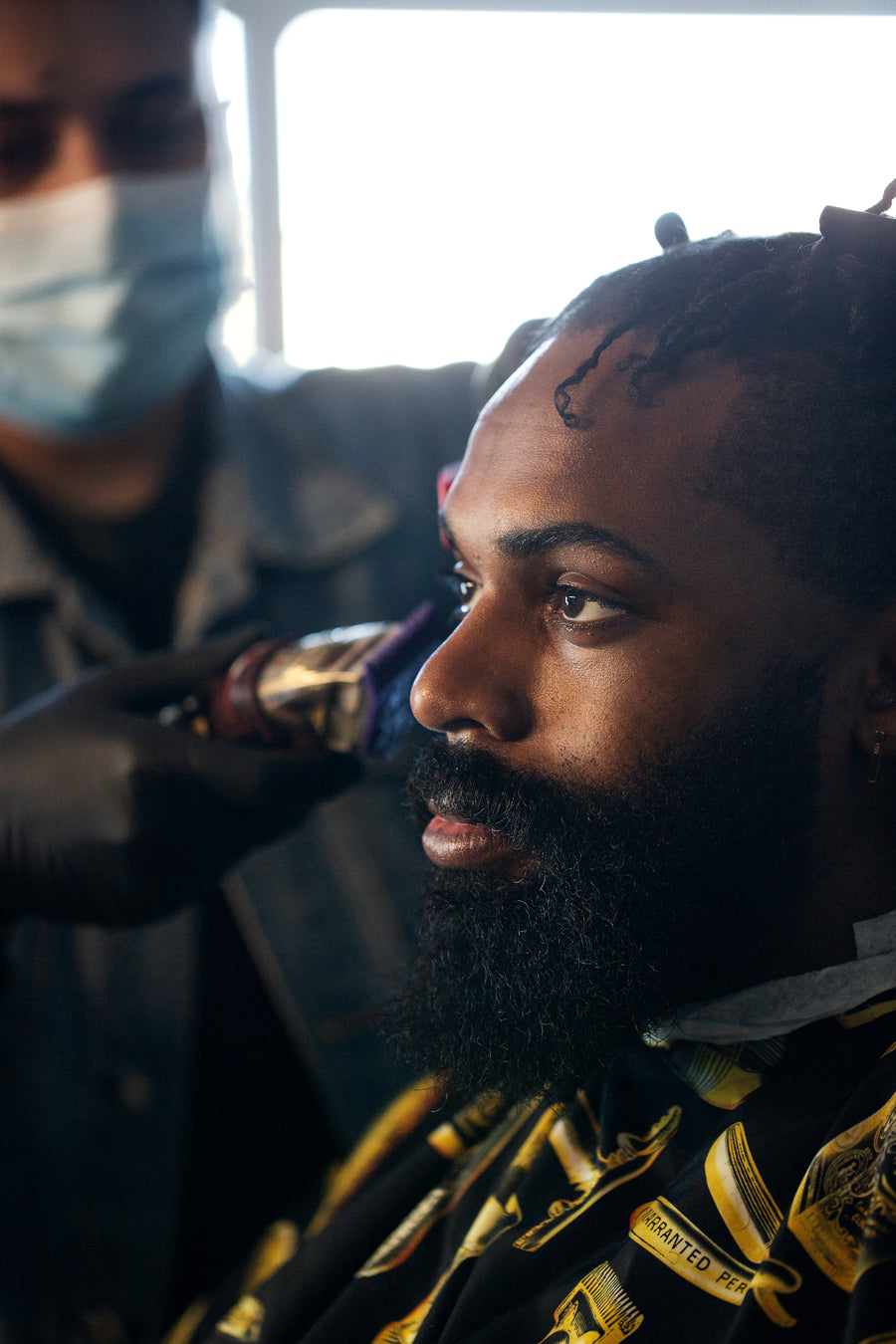
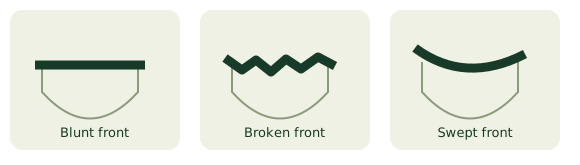
Choose the version that fits your routine
Compare the result you want before deciding on a guard number or product.
| Direction | What changes | What to confirm |
|---|---|---|
| Blunt fringe | A clearly defined front line | Agree on where the line lands relative to the eyebrows. |
| Textured fringe | Small gaps and an uneven edge | Keep enough density that the gaps look intentional to you. |
| Swept fringe | A diagonal path across the forehead | Leave enough travel length and confirm the preferred direction. |
Start with the shape across the forehead
A soft fringe has a less definite outline, while a blunter fringe creates a more obvious edge. A textured version shows separation between sections rather than reading as one solid strip. These descriptions can overlap, so a clear front reference is more useful than asking for a fashionable name alone.
Decide whether you want the fringe above the eyebrows, near them or swept slightly away from the centre. Describe the dry position rather than relying only on a measurement. A front that appears long enough when damp can sit differently once movement returns. Ask your barber to show how the intended shape relates to your natural hairline and the amount of coverage you prefer.


Check whether your hair wants to fall forward
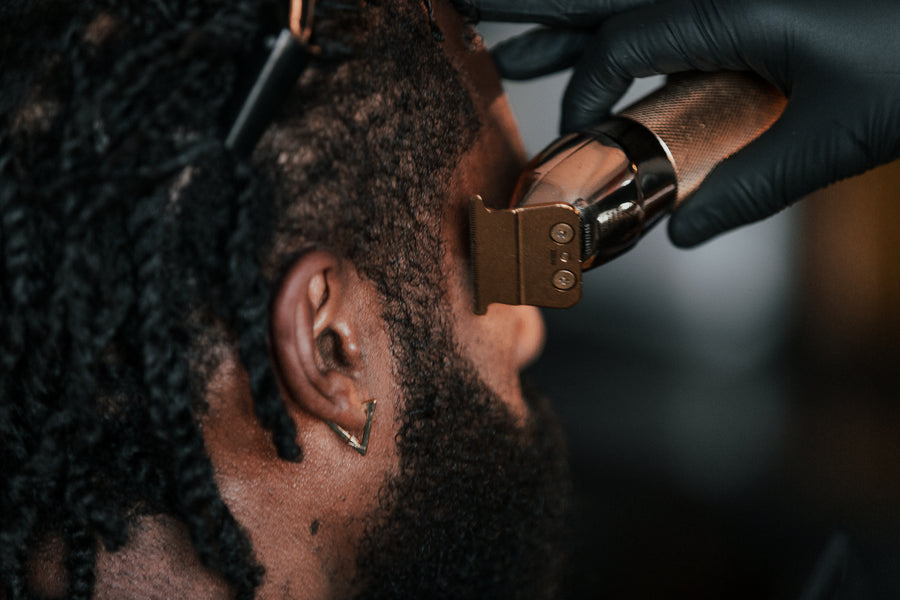
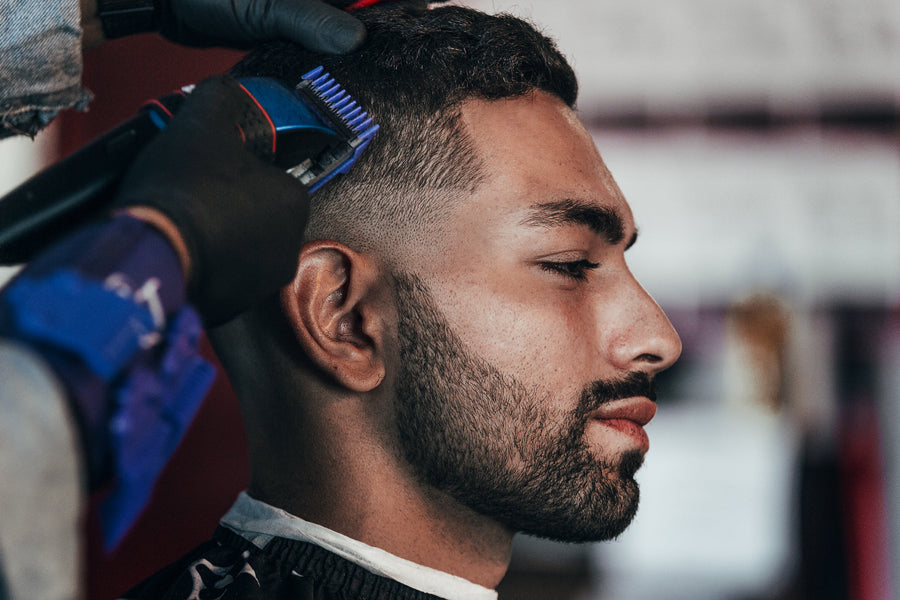
A fringe can be easy to wear when the front naturally lies forward, and more demanding when the roots grow strongly upward or to one side. That does not automatically rule it out, but it changes the likely routine. Tell the barber whether you air-dry or use a dryer and how much time you are willing to spend on the front.
Look at your current hair in its ordinary dry state before the visit. If the front lifts, splits or bends in one place, describe that behavior. Ask whether extra length, a different edge or a slightly altered direction would make the style easier. Removing more length is not always the solution to a fringe that will not sit down.
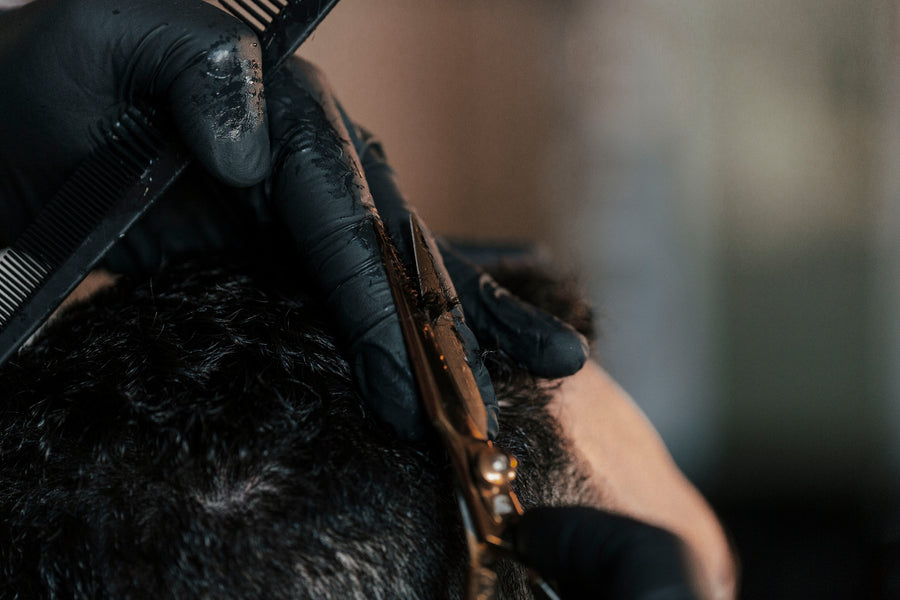

Straight, wavy and curly fringes need different discussions
On straight hair, a strong front edge may be more visible, so decide whether you want a deliberate line or a softer finish. With waves, the bend can determine where sections sit across the forehead. Curly hair adds another change between stretched length and its natural dry position.
For waves and curls, explain the shape you want once the hair has settled. If you like a curl-led fringe, say whether you prefer loose movement across the forehead or a more compact outline. Avoid choosing a photograph of a different texture without discussing what needs adapting. You may be able to borrow its overall direction without reproducing the same separation or exact edge.
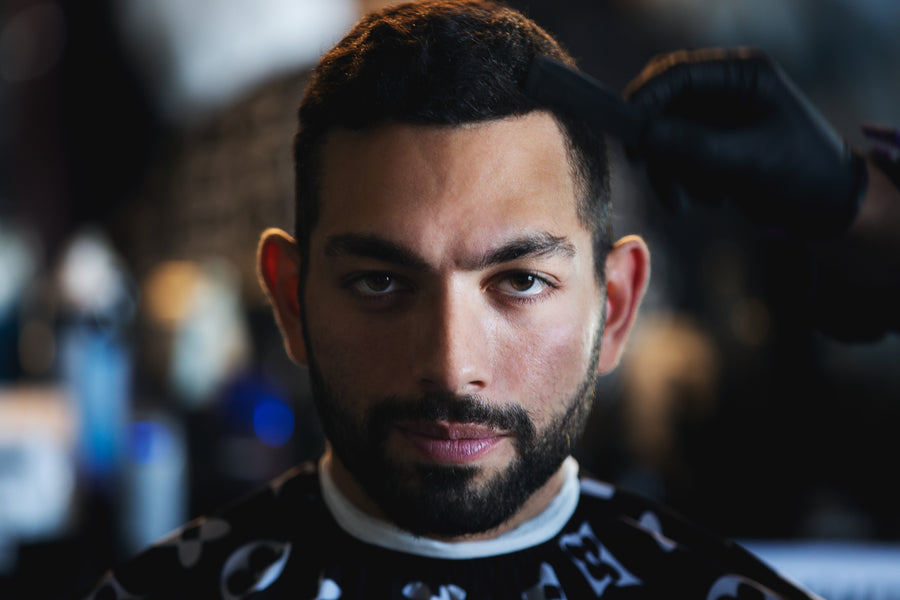
Connect the fringe to the top and sides
A fringe is part of the top, not a separate strip added to a fade. The length behind it helps determine how much weight moves forward and how the crown connects. Ask whether the reference relies on more top length than you currently have, especially if you are growing out a shorter cut.
The upper sides matter too. Keeping some weight can make the silhouette fuller; removing more changes the contrast beside the fringe. Agree on the connection rather than treating the top and fade as unrelated decisions. If the reference has a pronounced separation between long top and short sides, ask whether you want that feature or a smoother blend on your own haircut.
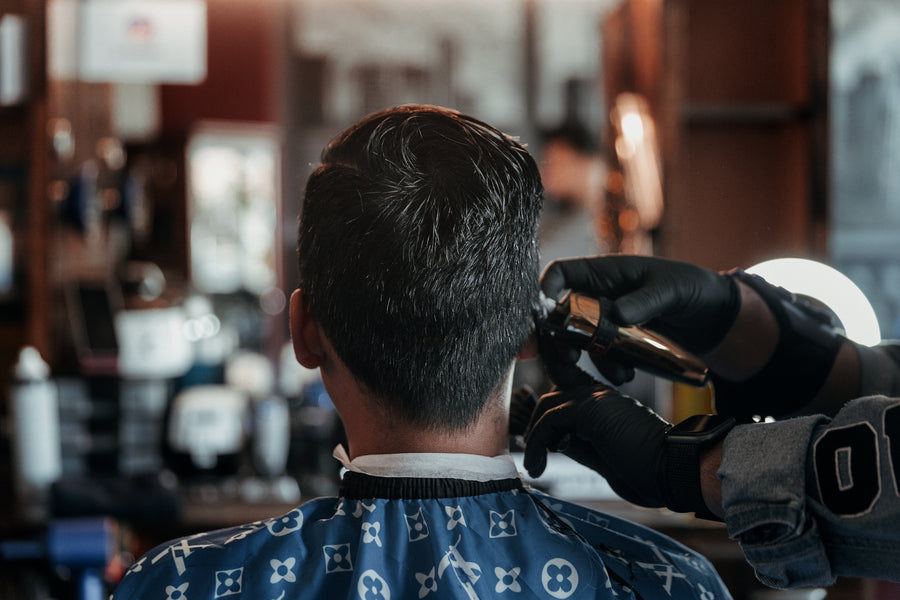
Choose the finish on the sides
The mid placement describes the approximate height of the side transition. You can combine it with a skin finish or preserve visible hair at the bottom. A darker or softer side finish may change the overall impression even if the front remains the same.
If your main goal is the fringe, do not let a close-sided reference silently determine how exposed you want the sides to be. Point out the front detail you like, then discuss coverage separately. Ask the barber to indicate the proposed fade height and explain the shortest setting. This is particularly helpful when you are moving from a fuller hairstyle and want the change to feel manageable.
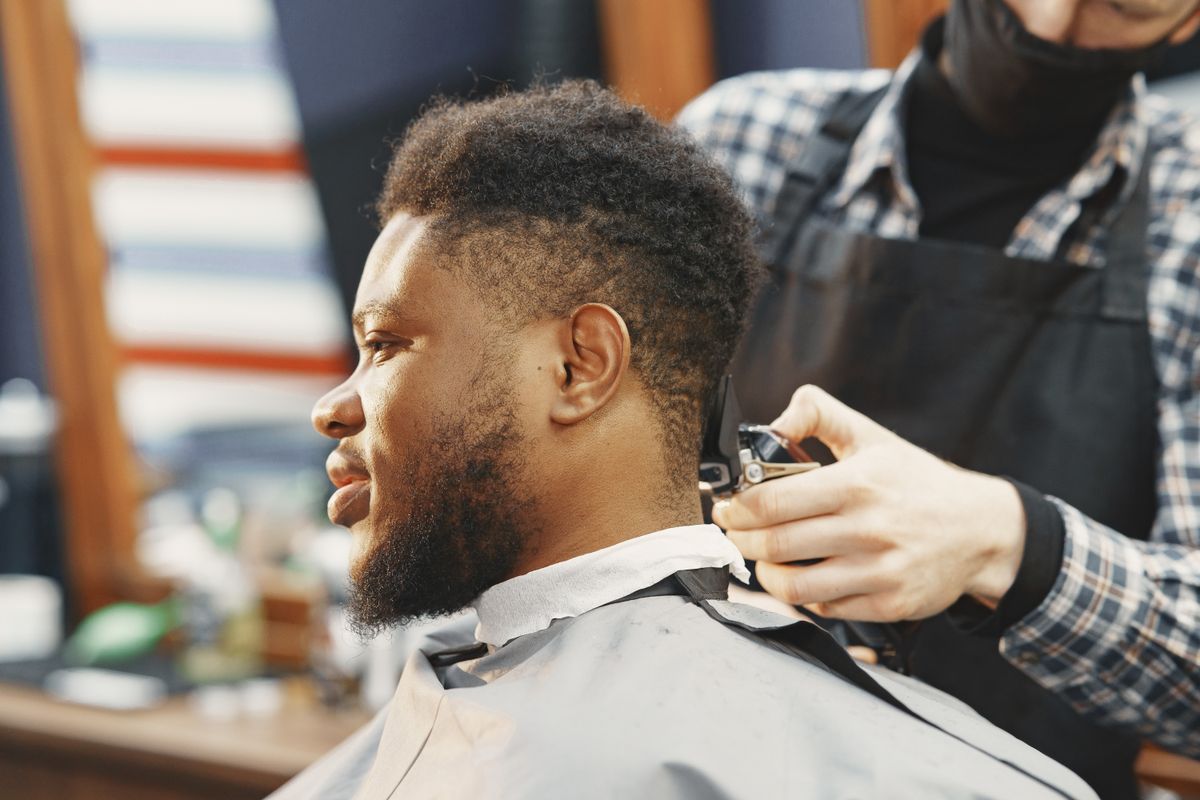
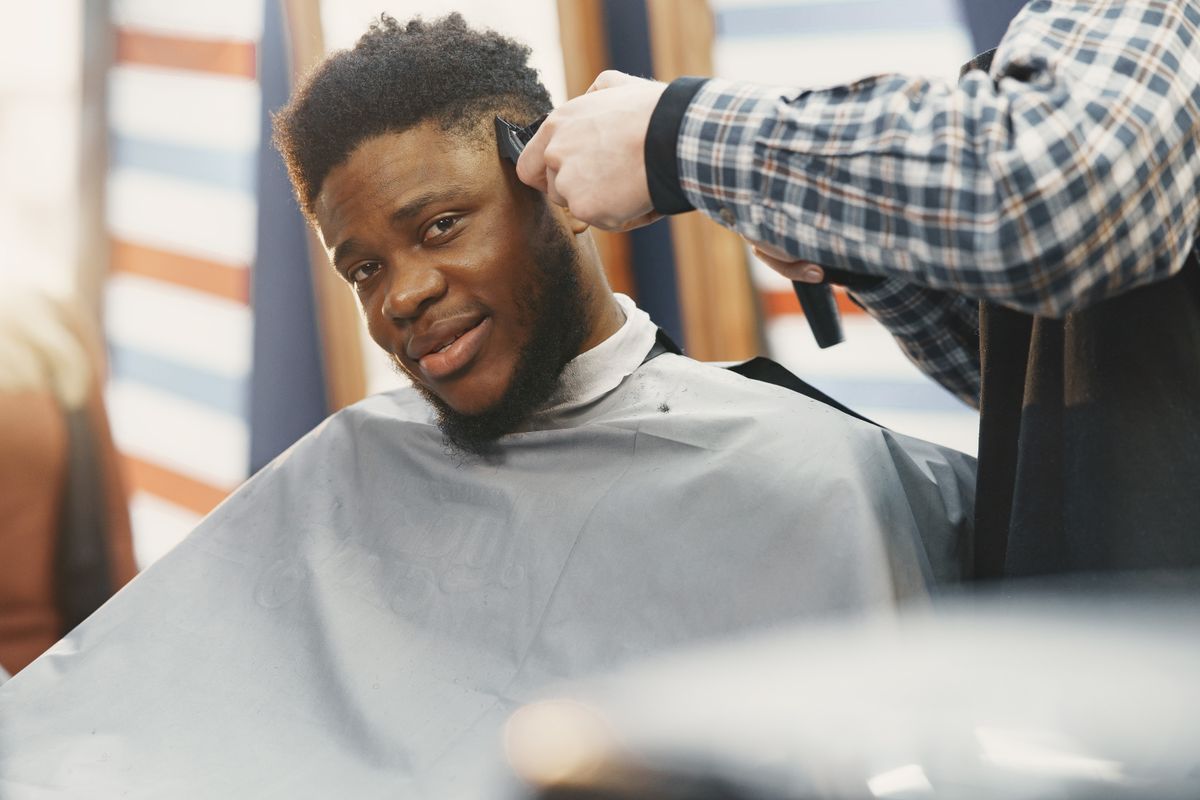
What to say in the consultation
Try a clear starting request: “I want a mid fade with the top worn forward and a soft, textured fringe. Please agree the dry fringe position with me before taking it shorter.” Replace soft and textured with a blunter outline if that is the result you actually want.
Add the sides, crown and routine. Explain whether you want a skin finish, whether the crown has a difficult growth pattern and whether you style with heat. Bring both a front and side view of the reference. If you dislike one feature, such as an unusually sharp edge or a shaved part, identify it explicitly. A photograph should support a conversation, not replace the parts it cannot show.
When the fringe grows or stops sitting well
As the front grows, it may touch the eyebrows, fall into the eyes or start bending differently. Note which of those changes makes you want a trim. The sides may need refreshing on a different schedule, so ask whether the front can be adjusted without automatically taking the whole top shorter.
If you want to grow the fringe into another style, tell the barber before the routine trim. A side-swept or swept-back direction may need more length in particular areas. Ask which parts should be preserved and what intermediate shape is realistic. If the fringe never sat comfortably even immediately after the cut, discuss the original growth direction and shape instead of repeatedly removing a little more from the same edge.
A routine you can test at home
- Reset the front with a little water if it has dried bent from sleep.
- Place the roots forward or diagonally according to the agreed fringe shape.
- Allow the hair to dry, then refine the ends rather than cutting or judging the wet length.
- Check that the fringe clears your eyes and works with glasses during ordinary movement.
The fringe separates in the same place every morning
Look at whether a natural part or cowlick is pushing it apart. Adding more product to the ends may not change that root direction. Try setting the front while damp. If it still opens, ask about a softer split or swept shape instead of expecting a perfectly solid straight line.
A more precise barber request
Keep a soft forward fringe that finishes here when dry. I do not want a hard straight line. Keep the corner connected to the top and use a mid fade below it.
An example request to adapt, not a guaranteed result or a record of a tested client.
Common questions
Is a textured fringe the same as a French crop?
The terms can overlap in casual use, but they do not guarantee identical top lengths or front edges. Show the outline and direction you want, then ask your barber how they would describe it.
Can a mid fade fringe work without a dryer?
It depends on how your front naturally grows and sits. Explain that you air-dry so the barber can adapt the length and shape to that routine.
Should I choose the fringe length when my hair is wet?
Discuss the dry result you want. Movement and curl can change where the front sits as it dries, so a damp view alone may not represent your everyday shape.